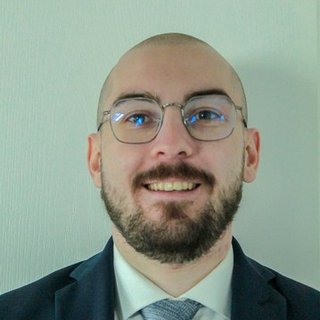
PhD in microbiology. At ANSES, the French food safety agency, I assessed the risk posed by a foodborne pathogen in imported seafood: antimicrobial resistance, virulence, biofilms and disinfectant efficacy. Of 845 isolates, 20.6% carry acquired resistance to a clinically important antibiotic; 49 resistance genes and 44 virulence genes were identified across 39 genomes; two industrial disinfectants leave live bacteria that are undetectable by culture. I am looking for a first position in R&D or method development, in the food industry, diagnostics or hygiene.
Available immediately · Permanent or fixed-term contract · France, Belgium, Luxembourg, Switzerland
Experience
R&D Project Scientist (PhD)
ANSES, Food Safety Laboratory
2022 – 2025 · Boulogne-sur-Mer
PhD on Vibrio parahaemolyticus in imported seafood, in collaboration with the national reference laboratory for Vibrio.
More than 200 antimicrobial susceptibility tests performed and interpreted (CLSI, EUCAST), as part of the screening of 845 isolates; 20.6% of these isolates carry acquired resistance to a clinically important antibiotic. Selection of 39 representative strains.
DNA extraction and quality control for 39 strains for sequencing (Illumina + Nanopore, outsourced). Interpretation of genomic results with a bioinformatician: 49 resistance genes and 44 virulence genes identified.
Two industrial disinfectants (benzalkonium chloride, alkyl dipropylene triamine) tested on biofilms (culture, confocal microscopy, PMA-qPCR): bacteria alive but undetectable by culture, hence a risk of false negatives in control testing.
Viability PMA-qPCR applied with standard curves and controls, compared with culture.
Supervised an engineering intern, trained the laboratory technicians, presentations in French and English.
Quality framework COFRAC (French accreditation body) / ISO 17025; ISO 21872-1 standard (detection of Vibrio).
Junior research engineer (second-year Master's internship)
BioEcoAgro Joint Cross-Border Research Unit
2022 · Boulogne-sur-Mer
Validation of genes of interest in the Vibrio harveyi – European sea bass interaction: protocols, RT-qPCR, RNA-seq data analysis.
Régnier A., Chesnais V., Dumaire C. et al. New insights into the resistome-mobilome–biofilm relationship in Vibrio parahaemolyticus. Food Microbiology 140, 105162 (2026). doi:10.1016/j.fm.2026.105162
Régnier A., Chalivat É., Chesnais V. et al. Increased biomass and viable but nonculturable state following benzalkonium chloride exposure in Vibrio parahaemolyticus biofilm, independent of the disinfectant resistome. International Journal of Food Microbiology 445, 111490 (2026). doi:10.1016/j.ijfoodmicro.2025.111490
Régnier A., Chalivat É., Dumaire C. et al. Induction of the viable but non-culturable state by an alkyl dipropylene triamine-based disinfectant in Vibrio parahaemolyticus biofilms. Scientific Reports 15, 44003 (2025). doi:10.1038/s41598-025-27753-9
Merda D., Vila-Nova M., Bonis M. et al. Unraveling the impact of genome assembly on bacterial typing: a one health perspective. BMC Genomics 25, 1059 (2024). doi:10.1186/s12864-024-10982-zco-author
Communications
French Society for Microbiology (SFM) congress, “Microbes dans un monde de transition” (“Microbes in a transitional world”), Bordeaux, Sept 2025: oral and poster (in French)
SFM “Bienvenue chez les Microbes”, Lille, Oct 2024: poster (in French)
Regional PhD Day, SFR Campus de la mer (Structure Fédérative de Recherche, a marine and coastal research federation), July 2024: poster (in French), 3rd prize
European Symposium on Food Safety, International Association for Food Protection (IAFP), Geneva, May 2024: oral, in English
PhD Day, SFR Campus de la mer, Boulogne-sur-Mer, Nov 2023: oral (in French), best presentation prize